



Web design in Singapore typically costs between SGD 800 and SGD 80,000+, depending on project scope, agency tier, and required features. The Singapore web industry is mature, competitive, and internationally benchmarked — businesses can find everything from budget freelancers to enterprise-grade digital agencies.
- Budget websites (5–8 pages): SGD 800 – SGD 3,500
- SME business websites: SGD 3,500 – SGD 15,000
- E-commerce platforms: SGD 8,000 – SGD 50,000+
- Enterprise / custom web applications: SGD 30,000 – SGD 200,000+
- Ongoing maintenance retainers: SGD 200 – SGD 2,000/month
Use this guide to benchmark quotes, understand what drives costs, and choose the right Singapore web design partner for your business in 2026.
1. Why Web Design in Singapore Is Different
Singapore occupies a unique position in Southeast Asia’s digital economy. As a global financial hub, a city-state with near-universal internet penetration (95%+), and a government that actively promotes digital transformation through programs like the Infocomm Media Development Authority (IMDA) and Enterprise Development Grant (EDG), web design standards here are consistently higher than the regional average.
For businesses operating in Singapore, a website is not just a marketing brochure — it is often the primary channel for customer acquisition, B2B trust-building, and transaction processing. This shapes how local agencies price, scope, and execute projects.
Singapore’s Digital Landscape at a Glance (2026)
| Metric | Singapore Figure | Global Context |
| Internet Penetration | 96.4% | Global avg: 67% |
| Mobile-first users | ~78% of web traffic | Southeast Asia avg: 74% |
| E-commerce adoption | ~62% of population | Rapidly growing |
| SMEs with a website | ~73% | Up from 58% in 2020 |
| Avg page load expectation | < 2.5 seconds | Users abandon at 3s+ |
These figures matter when evaluating web design proposals. A Singapore-based vendor who does not proactively discuss Core Web Vitals scores, mobile UX, and bilingual/multilingual content (English, Mandarin, Malay, Tamil) is likely below market standard.
See More: Best Web Design Agency In Singapore – Top Picks & Guide
2. Types of Web Design Services Available in Singapore
2.1 Static Brochure Websites
A static website is the most basic form of web presence — typically 5 to 10 pages covering Home, About, Services, Contact, and a few supporting pages. These are built on platforms like WordPress (with minimal plugins), Webflow, or Squarespace, or as hand-coded HTML/CSS sites.
Best for: Professional services firms, consultants, small restaurants, local clinics, and organisations that primarily need credibility and contact information online.
Typical cost range: SGD 800 – SGD 4,500
Timeline: 2 – 6 weeks
2.2 CMS-Powered Business Websites
The most common category for Singapore SMEs. These sites are built on content management systems (primarily WordPress, but also Webflow, Drupal, or Joomla) and allow the client to update content without touching code. They typically include a blog, a contact form with CRM integration, basic SEO setup, and a responsive mobile layout.
Key considerations in Singapore’s market: Many agencies bundle hosting (on local servers for speed compliance), SSL, and a one-year support contract into the package price. Always clarify what is included and what incurs additional charges post-launch.
Typical cost range: SGD 3,000 – SGD 15,000
Timeline: 4 – 12 weeks
2.3 E-Commerce Websites
Singapore has a thriving e-commerce market, dominated by both regional platforms (Shopee, Lazada) and independent brand stores. For businesses wanting their own storefront, the major platforms used locally are WooCommerce (WordPress), Shopify, Magento (for enterprise), and increasingly Shopify Plus for growing direct-to-consumer brands.
Complexity and cost vary enormously. A basic Shopify store with a premium theme and under 50 products can be done for SGD 3,000–6,000. A custom WooCommerce build with inventory integration, payment gateway configuration (PayNow, Stripe, eNETS, GrabPay), shipping API connections, and customer account portals can reach SGD 25,000–60,000+.
Typical cost range: SGD 3,500 – SGD 60,000+
Timeline: 6 – 20 weeks
2.4 Custom Web Applications
These are purpose-built platforms: booking systems, member portals, SaaS dashboards, B2B procurement portals, marketplace platforms, and similar. They go beyond web design into software engineering — typically built using frameworks like Laravel (PHP), React/Next.js, Vue.js, or Node.js on the backend.
Singapore’s strong fintech, logistics, and healthcare sectors drive significant demand for this category. Engaging a vendor for custom development requires detailed technical scoping, and clients should budget for post-launch iteration cycles, not just a single delivery.
Typical cost range: SGD 30,000 – SGD 250,000+
Timeline: 3 – 12+ months
2.5 Landing Pages & Campaign Microsites
High-converting, single-purpose pages built for paid advertising campaigns, product launches, or event registration. In Singapore’s competitive digital advertising market (average CPC on Google Ads is among the highest in Asia), landing page quality directly impacts ROI. Agencies with dedicated conversion rate optimisation (CRO) expertise charge a premium but can deliver measurable performance lifts.
Typical cost range: SGD 1,200 – SGD 8,000 per page
3. Web Design Singapore: Full Pricing Breakdown 2026
The table below consolidates pricing data gathered from a cross-section of Singapore web agencies, freelancers, and verified project invoices. Use it as a benchmark — final quotes will vary based on the specific agency, complexity, timeline, and included services.
| Project Type | Entry-Level (Freelancer) | Mid-Tier Agency | Premium / Enterprise Agency | Typical Timeline |
| 5-page brochure site | SGD 800 – 1,800 | SGD 2,500 – 5,000 | SGD 6,000 – 12,000 | 2 – 6 weeks |
| 10–15 page business site | SGD 2,000 – 4,000 | SGD 5,000 – 12,000 | SGD 12,000 – 25,000 | 5 – 10 weeks |
| Shopify store (basic) | SGD 1,500 – 3,500 | SGD 3,500 – 8,000 | SGD 8,000 – 18,000 | 3 – 8 weeks |
| WooCommerce store | SGD 2,500 – 5,000 | SGD 6,000 – 18,000 | SGD 18,000 – 45,000 | 6 – 16 weeks |
| Custom web application | Not recommended | SGD 25,000 – 60,000 | SGD 60,000 – 250,000+ | 3 – 12 months |
| Landing page (single) | SGD 600 – 1,500 | SGD 1,500 – 4,000 | SGD 4,000 – 10,000 | 1 – 3 weeks |
| Website redesign | SGD 1,500 – 5,000 | SGD 5,000 – 18,000 | SGD 18,000 – 60,000 | 4 – 14 weeks |
| Monthly maintenance | SGD 100 – 300 | SGD 300 – 800 | SGD 800 – 3,000 | Ongoing |
| SEO setup (on-page) | SGD 300 – 800 | SGD 800 – 3,000 | SGD 3,000 – 8,000 | One-time |
Note: All prices are in Singapore Dollars (SGD) and are inclusive of design, development, and one revision cycle unless otherwise noted. GST (currently 9% as of 2026) may be added on top by GST-registered vendors.
See More: How to Check Your Brand Visibility in AI Search
4. What Drives Web Design Costs in Singapore
Understanding the variables behind a quote helps you evaluate whether a proposal is reasonable — and identify where you are paying for things you don’t need, or where a suspiciously low quote is cutting corners.
4.1 Design Complexity & Custom vs. Template
The single largest cost variable. A website built on a premium off-the-shelf template (ThemeForest, Envato, or Shopify theme store) with customised colours and content can be completed in days. A bespoke design — where a UI/UX designer creates original wireframes, conducts user research, and iterates through multiple design rounds — represents weeks of professional work and commands a proportionally higher fee.
In Singapore’s market, most mid-tier agencies offer a hybrid approach: a custom homepage design with templated inner pages. Ask vendors specifically whether any template is involved and which assets are original work.
4.2 Number of Pages & Content Complexity
More pages mean more design, more QA, and more content structure work. But page count alone is a blunt proxy — a 20-page service site with straightforward layouts costs less than a 10-page site where each page has complex interactive sections, animated data visualisations, or embedded third-party tools.
4.3 Integrations & Functionality
Every third-party integration adds cost. Common integrations requested by Singapore businesses include:
- Payment gateways: PayNow QR, Stripe, PayPal, GrabPay, eNETS, OCBC/DBS payment APIs
- CRM/ERP connections: Salesforce, HubSpot, Zoho, SAP
- Booking and scheduling: Calendly, Acuity, custom booking engines
- Accounting: Xero, QuickBooks (popular in Singapore SME market)
- Live chat: Intercom, Freshchat, Zendesk
- Government / compliance: SingPass MyInfo integration (for verified data capture)
- Analytics: Google Analytics 4, Mixpanel, Hotjar
SingPass MyInfo integration is uniquely Singapore-specific and adds meaningful development cost — typically SGD 3,000–8,000 in additional fees — but it dramatically improves form conversion rates for regulated industries.
4.4 Copywriting & Content Production
Many web design packages in Singapore explicitly exclude copywriting. If you supply finalised, proofread copy and optimised images before the project starts, you maintain the quoted price. If you need the agency to write or source content, budget SGD 80–200 per page for basic copy and significantly more for in-depth product descriptions, technical content, or multi-language translation (English, Simplified Chinese, Bahasa Melayu).
4.5 SEO & Performance Optimisation
A basic launch-ready website in Singapore should meet Google’s Core Web Vitals thresholds (LCP under 2.5s, CLS under 0.1, INP under 200ms) and include on-page SEO fundamentals: optimised title tags, meta descriptions, header hierarchy, image alt text, structured data where relevant, and an XML sitemap. These are baseline expectations, not premium add-ons — if a vendor does not mention these, ask directly.
More advanced SEO packages — keyword research, content strategy, backlink building, local SEO for Google Business Profile — are typically sold as ongoing monthly retainers separate from the web design project.
4.6 Hosting & Infrastructure
Website speed matters significantly in Singapore, both for user experience and for Google search rankings. Many agencies offer managed hosting on Singapore-based servers (AWS Singapore region ap-southeast-1, or Google Cloud Singapore) at SGD 50–300/month depending on traffic requirements. Shared hosting at the low end may load noticeably slower for Singapore users compared to a local CDN-backed setup.
Clarify: Does the agency own the hosting infrastructure, or resell third-party hosting? What is the uptime SLA? Who owns the domain and hosting account if you part ways?
See More: 5 Essential Factors When Choosing an E-commerce Development Company in Singapore
5. Types of Web Design Agencies in Singapore
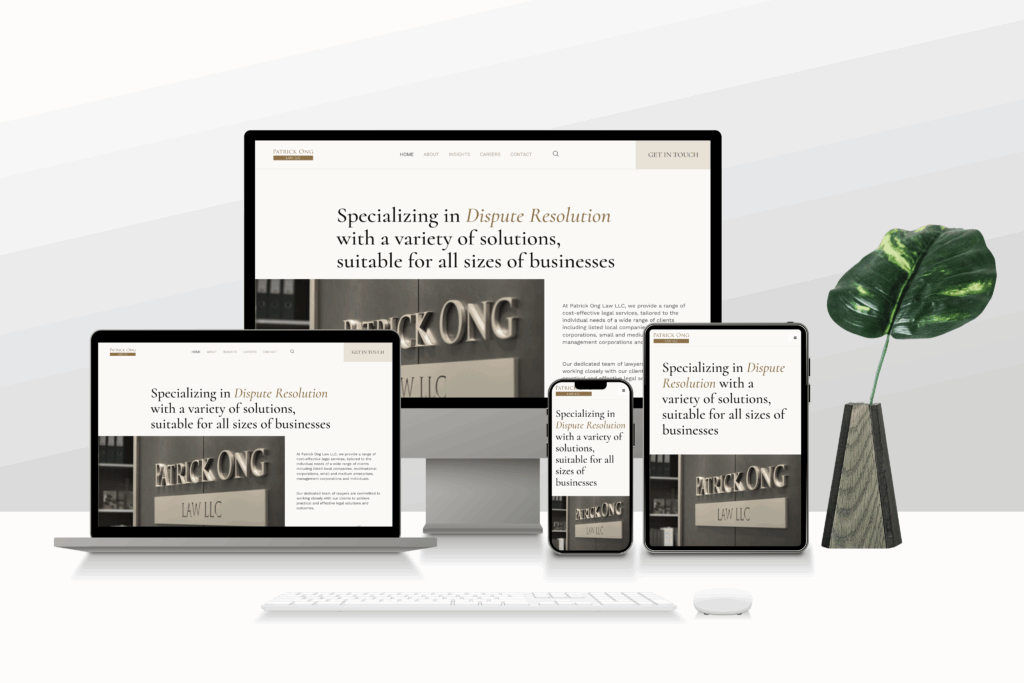
5.1 Full-Service Digital Agencies
These agencies offer web design as part of a broader digital marketing portfolio that includes SEO, paid media, social media management, and sometimes branding. They are generally staffed with 20–100+ people and are suitable for clients who want a single vendor relationship for all digital activity. Names in this tier include agencies like MediaOne, OOm, and First Page Digital, among others.
Advantage: Integrated strategy across channels. Disadvantage: Web design may not be their primary craft — a dedicated web design studio often produces higher-quality work for the same or lower cost.
5.2 Specialist Web Design & Development Studios
Studios focused exclusively on web design and development tend to have deeper technical expertise and more refined design processes. They may specialise further by platform (Webflow experts, WooCommerce specialists) or by industry (fintech, healthcare, F&B). For projects where quality and technical precision are paramount, this is usually the best category to engage.
5.3 Freelancers & Independent Contractors
Singapore has a significant pool of highly skilled independent web designers and developers, including many former agency professionals. Hiring a freelancer can reduce costs by 40–60% versus agency rates, but introduces different risk factors: availability, project management, handoff documentation, and continuity if the relationship ends.
For a well-scoped brochure site or landing page, an experienced Singapore-based freelancer is often the most cost-efficient choice. For complex projects requiring a team, ongoing support SLAs, or enterprise-level accountability, an agency is more appropriate.
5.4 Offshore Development with Singapore Project Management
A growing model where a Singapore-based project manager or digital agency fronts client relationships while development is handled by teams in Malaysia, Vietnam, Indonesia, or India. Costs can be 30–50% lower than pure Singapore delivery, but quality control, communication overhead, and IP considerations require careful vendor due diligence.
If a quote seems unusually low, ask explicitly whether development is fully local or outsourced offshore.
6. Singapore Government Grants for Web Design (2026)
One of Singapore’s distinguishing advantages for SMEs is the availability of government subsidies for digital investment. The following programmes are relevant to web design projects as of early 2026.
| Grant / Scheme | Administering Body | Coverage | SME Subsidy | Key Eligibility |
| Enterprise Development Grant (EDG) | Enterprise Singapore | Branding, web, digital tools | Up to 50% of costs | Singapore-registered, min 30% local shareholding |
| Productivity Solutions Grant (PSG) | IMDA / Enterprise Singapore | Pre-approved digital solutions | Up to 50% | SMEs with ≤ SGD 100M revenue or ≤ 200 employees |
| Start Digital Pack | IMDA | Basic digital tools bundle | Subsidised rates | New businesses, first 18 months |
| SkillsFuture Enterprise Credit | SSG | Staff digital upskilling | Up to SGD 10,000 | Singapore-registered businesses |
Important: PSG specifically covers pre-approved vendors and solutions. If you want to use PSG funding for your web design project, your chosen vendor must be on the approved vendor list. Not all Singapore web agencies are PSG-approved; confirm this before shortlisting.
EDG is more flexible — it can cover custom web development as part of a branding or market access project — but requires a formal application and assessment before work begins. Budget an additional 4–8 weeks for grant approval before project kickoff.
7. How to Evaluate Web Design Vendors in Singapore
7.1 Portfolio & Case Studies
A vendor’s portfolio is the most direct evidence of their capabilities. Look beyond aesthetics: Do their sites load fast (test with PageSpeed Insights)? Are they mobile-optimised? Do they show measurable business outcomes (conversion rate improvements, traffic growth, revenue generated for clients)?
In Singapore’s market, be alert to portfolio work where the agency designed a concept but the client managed development elsewhere, or where old work is presented without transparency about recency. Ask for live URLs rather than static screenshots.
7.2 Technical Competency Indicators
During initial conversations, a technically competent Singapore web agency should proactively discuss:
- Core Web Vitals and Google Search Console integration from day one
- Accessibility compliance (WCAG 2.1 AA is the Singapore government standard under the Digital Service Standards)
- PDPA (Personal Data Protection Act) compliance for forms and data handling
- Mobile-first design approach, not just responsive adaptation
- SSL/TLS certificates, HTTPS across all pages
- Version control and staging environments for quality assurance
7.3 Project Management & Communication
Successful web projects require structured communication. Ask prospective vendors about their project management tools (common in Singapore’s industry: Notion, Asana, ClickUp, or Basecamp), how they handle change requests, and what their escalation process is when timelines are at risk.
A fixed-price contract with a clearly defined scope of work, a milestone payment schedule, and explicit terms about revision rounds is standard practice. Be wary of time-and-materials billing without a capped budget for straightforward projects.
7.4 Post-Launch Support
The go-live date is not the end of the project — it is the beginning of your relationship with the platform. Clarify what happens in the 30–90 days after launch: Who fixes bugs? What is the response time SLA? Is training for your team included? What does the ongoing maintenance retainer cover?
See More: The Secret to “Rocket-Fast Web Design” in Singapore: 300% Revenue Growth in Just 90 Days?
8. Common Mistakes Businesses Make When Hiring Web Designers in Singapore
Choosing on price alone
A SGD 900 website from a non-specialist is rarely a bargain. Hidden costs include poor SEO foundations that require expensive remediation, slow load times that depress ad campaign performance, security vulnerabilities, and inflexible page builders that make future updates cumbersome.
Not clarifying ownership of deliverables
Who owns the design files, the source code, the domain, and the hosting account at the end of the project? In Singapore’s market, some agencies retain hosting control as a lock-in mechanism. All IP and credentials should transfer to you at project completion.
Underestimating content preparation
Projects stall — and budgets inflate — when clients cannot supply ready content. Finalise your copy, high-resolution photography, company logo (vector format), and brand guidelines before the design phase begins, not during it.
Ignoring mobile-first from the brief
Singapore’s mobile traffic share has consistently been above 75% since 2022. If your vendor presents desktop mockups first and treats mobile as an afterthought, the final product will reflect that priority inversion.
Skipping the discovery/scoping phase
The cheapest way to run a web project is to scope it carefully upfront. Vague briefs produce costly change orders. Reputable Singapore agencies will conduct a discovery workshop (sometimes charged separately at SGD 500–2,500) to define information architecture, target audience, key user journeys, and technical requirements before writing a line of code.
9. Web Design Trends Shaping Singapore in 2026
9.1 AI-Assisted Design & Development
Generative AI tools (Figma AI, GitHub Copilot, v0 by Vercel, and others) have materially reduced the time required for wireframing and boilerplate code. This is beginning to compress prices at the lower end of the market. However, the creative judgment, user research, and strategic thinking that distinguish excellent web design from adequate web design remain human skills. Clients should ask vendors how they are using AI in their workflow and what quality controls are in place.
9.2 Headless & Composable Architecture
Enterprise clients in Singapore’s financial services, retail, and healthcare sectors increasingly ask for headless CMS architecture — decoupling the content management layer from the presentation layer for greater flexibility, performance, and integration with third-party systems. Platforms like Contentful, Sanity, and Storyblok are gaining adoption. This approach carries higher upfront development costs but significant long-term operational benefits.
9.3 Accessibility & Inclusive Design
Singapore’s government Digital Service Standards mandate WCAG 2.1 AA compliance for public sector websites. This standard is increasingly expected in the private sector as well, driven by aging demographics, corporate ESG commitments, and SEO benefits. Accessibility audits and remediation are now a growing service line for Singapore web agencies.
9.4 Sustainability in Digital
Digital carbon footprint — the energy consumed by web servers, CDNs, and browser rendering — is an emerging consideration for sustainability-focused organisations in Singapore. Some agencies now offer green hosting options (running on renewable energy) and performance optimisation specifically targeted at reducing data transfer and server load.
9.5 Data Privacy Architecture Post-PDPA Amendment
Singapore’s PDPA amendments have sharpened requirements around consent management, data breach notification, and the handling of user personal data collected via websites. Cookie consent banners, privacy policy updates, and form data handling are no longer afterthoughts — they are compliance requirements that must be built into the website architecture from the start.
10. Brief Checklist Before You Start Your Web Design Project
Use this checklist when approaching Singapore web design vendors to ensure you receive accurate, comparable quotes and avoid common project failures:
- Define your primary business goal for the website (lead generation / e-commerce / brand credibility / customer support)
- Document your target audience and key user journeys
- Compile all existing brand assets: logo (vector), brand colours/fonts, photography
- Decide on your CMS preference or ask vendors to recommend based on your team’s technical ability
- Determine whether PSG or EDG grant funding is applicable and confirm vendor approval status
- Set a realistic budget range and share it with vendors — vague briefs produce inaccurate quotes
- Request at least 3 comparable quotes with itemised scope breakdowns
- Ask for live portfolio references in your industry
- Clarify IP ownership, post-launch support terms, and monthly maintenance scope in writing
- Confirm hosting location (Singapore-based for best local performance) and uptime SLA
11. Frequently Asked Questions
How much does it cost to build a website in Singapore in 2026?
A basic 5–8 page business website costs between SGD 800 and SGD 5,000 from a freelancer or budget agency. A professionally designed and developed site from a reputable mid-tier Singapore agency typically ranges from SGD 5,000 to SGD 20,000. Enterprise and e-commerce platforms can range from SGD 25,000 to well over SGD 100,000.
How long does it take to build a website in Singapore?
A simple brochure site can be completed in 2–4 weeks if content is ready. A typical SME business website takes 6–10 weeks. E-commerce projects typically require 8–16 weeks. Custom web applications can take 3–12+ months depending on complexity.
Can I use Singapore government grants for web design?
Yes. The Productivity Solutions Grant (PSG) covers up to 50% of costs for pre-approved web solutions, and the Enterprise Development Grant (EDG) can fund custom web projects as part of a broader business capability upgrade. Confirm grant applicability with Enterprise Singapore and your chosen vendor before project commencement.
Should I use a Singapore-based agency or hire offshore?
For most Singapore SMEs, a local agency offers significant advantages: knowledge of local compliance requirements (PDPA, accessibility standards), familiarity with local payment gateways (PayNow, GrabPay), timezone-aligned communication, and eligibility for government grant claims. Offshore development is viable but introduces quality management overhead and may affect grant eligibility.
What is the difference between web design and web development?
Web design refers to the visual, structural, and user experience elements of a website — layout, typography, colour, information architecture, and interaction design. Web development refers to the technical implementation — writing code (HTML/CSS/JavaScript, backend languages) that makes the design functional. Many Singapore agencies offer both under one roof; specialist studios may focus on one or the other.
How do I know if a web design quote is fair?
Collect at least three itemised quotes for the same scope. Compare line-by-line: design fees, development hours, content migration, QA testing, launch support, and post-launch maintenance. Be cautious of quotes with no itemisation — they make cost control during the project impossible. Cross-reference against the pricing benchmarks in Section 3 of this guide.
Conclusion
Web design in Singapore in 2026 is a mature, competitive, and increasingly AI-augmented industry. Prices range from under SGD 1,000 for the most basic freelancer-built site to hundreds of thousands of dollars for enterprise digital platforms. The right investment level depends entirely on your business model, growth stage, and how central your website is to customer acquisition and revenue generation.
What distinguishes a successful web project in Singapore is not the size of the budget but the quality of the brief, the clarity of goals, and the diligence with which you evaluate and manage your vendor relationship. Use the pricing benchmarks, checklists, and evaluation frameworks in this guide to enter the market informed.
For most Singapore SMEs, a well-scoped project with a vetted mid-tier agency — potentially subsidised by PSG or EDG — represents the best risk-adjusted investment for a professional, performant, and scalable web presence in 2026.
Looking for a professional website that converts visitors into customers?
Our team provides professional website design services in Singapore tailored to your business goals.
Contact us to schedule a free consultation and explore the right solution for your brand.